Search This Blog

Thursday, March 13, 2014

TBT - 1997 Keynote on liturgical art, faith, and prayer

Today, I'm sharing a talk I gave called "With Open Hearts, Hands, and Voices," for a ministry conference in 1997. The talk incorporated songs that Gary, Terry and I performed with the audience, and they are referred to in the talk. I've added the SoundCloud link to where we sang "You Alone," and there is an iTunes playlist of the other three songs. 

“With Open Hands, Hearts, and Voices”

by Rory Cooney

Copyright © 1997

...I am speaking to you about myself as a human being, as a believer, and as an artist. I am going to speak to you about “Open Hands, Hearts, and Voices,” (I thought we should add “open minds,” but thought it might be too much of a reach for a church conference), about the experience of common prayer, from my own viewpoint, which can be described as unique in that I’ve stolen it from different places than you have. Partly, I will have to tell this story through the music I’ve made with these two fine people, my wife Theresa Donohoo and my friend Gary Daigle. I think that you may hear your own voice in this talk, too, because my music comes from the desire and hope and openness of you and the hundreds and thousands of other Christian folk among whom we minister, who look to us to shape a voice and a song that will echo true in the heart and soul.

So our conference theme, “With Open Hands, Hearts, and Voices.” It suggests a posture....open hands, open hearts, open voices. “Abre el corazón”. I thought a way we might approach the topic is this: first, let’s investigate what it means to be ‘open.’ What other values are in conflict with openness (like perhaps infallibility)? After we spend a little time there, then we might look at how the posture of openness makes prayer possible, and see how our own experience as human persons in relationship to one another teaches us about openness as a people to God. Finally, we will look briefly at how openness makes the dominion of God possible in this world, how Jesus kept trying to open us to that possibility through his prophetic art, and how prophetic art can be in today’s world, preparing it for a breakthrough of God’s justice as we make our way toward a jubilee in the new millennium. Throughout all of this, we will make use of a little music to keep our brains open to oxygen in case my words are less than persuasive, or in case there wasn’t a Starbucks between your house and this place this morning! We’ll begin with the song “If/Si” on your songsheets.

Here we sang IF/SI - a couple of refrains, a verse, a couple of refrains..

“To the tiny wind and the voice of the hurricane, open up my heart.”

What does it mean to be open? Before we try to investigate any religious meaningl, any meaning that binds us together as people and binds us to God, we ought to investigate what we mean by the words in our everyday speech, and see what mysteries lie there in our idioms. We talk about “open air” meetings, being open-minded, having open borders, being open-jawed, open for business, eyes wide-open, open windows and open-door policies, and wide-open spaces. What is common, what are the characteristics of the openness we so describe? By open, we mean inviting, even waiting for the unexpected. We mean fertile, acknowledging the possibility of growth, not finished. We mean inclusive, expansive. Open is the feminine word, it means fecund, accepting, receptive, vulnerable by choice. Open means aware of one’s surroundings, being in awe of them. Open means exposed to the elements, wind in one’s hair, daylight on one’s face. Open means aggiornamento, no more closed windows and dark places. Open is a question, a possibility, the answer “may/be.” And what is the opposite of open? Closed. Boarded up. Go away. Closed-minded, tight, tense, dark, coercive, fixed, dogmatic, clenched like a fist, exclusive, oppressive, keep-out, rigid, set in one’s ways, answered. Yes and no.

Here, we sang verse/refrain/verse of If/Si.

You probably can think of a person in your life who is characterized by the words I’ve used from our common vocabulary to describe open. It might be a woman or a man, but I will wager that this person, for all their faults, is a joy to be around, a good person to have a conversation with, a traveler, a journey-maker, with varied interests. The person probably makes a lot of mistakes and is able to laugh at them and learn from them. The person sees the pain and hurt in the world, and accepts responsibility as a human person for ameliorating that suffering in whatever ways are possible. You’ve probably caught yourself wishing on some days you were more like that one, with their eyes, their heart, their charming ability to be a fool and not be foolish.

And on the other hand, you may know someone more characterized by closed-ness. This one also might be a man or a woman. But I suspect that this is the person with whom you’re most likely to discuss sports and the weather, and politics and religion rarely come up in your table talk. Everything is a problem for this one, and the blame for the problem can clearly be placed on others. If only everyone believed what this one believed, if they voted like I do, if they went to this church, if they’d just go out and get a job. If we’d just build more prisons, if there were more capital crimes and hanging judges; if we’d close the borders, make that a sin, bring back the Baltimore catechism.....well, you get the idea. You know this person. Ralph Cramden, Archie Bunker, Homer Simpson, Jesse Helms. Lampooned in every generation, and they just won’t go away.

And it’s not easy to be open. We’re born open, but it’s hard to stay that way. We have to grow back into it, and it’s not easy. It’s comfortable and safe in the dark womb of exclusivity and self-preservation. The narrow birth canal is a lonely place, we can only guess what life will be like out of the darkness we have inherited, but we are pushed there by a need to breathe new air, by a need to breathe that grows within us as the tiny confines of our selfishness threaten to kill us in that monstrous womb.

As hard as it is for a person to grow into openness, it’s harder for a society. Our societies are made for protection and defense; they are by their very nature closed. The are an accumulation of all our faults, our walls, our prejudices, and our borders. If it weren’t for the indwelling spirit of God, if it weren’t for the voice of that spirit speaking out of the tradition of Israel that the earth and all who live there belong to God, if it weren’t for the voice reminding us out of the Torah that “you shall not oppress the alien and the stranger, for you yourselves were once aliens in the land of Egypt” and its implied threat to do unto us like God did unto Pharaoh, then an open society would be impossible. Praise be to God for the word that calls us out of darkness into light.

Openness makes true community possible. Only by recognizing that abundant life and not merely my survival is the goal of the universe, only by daring to break down the walls I’ve been taught to build around my treasures, my heart, and live in the open expanse of a creation charged with God’s presence, only by accepting the alien and the stranger who is the other as my equal in the sight of the transcendent One who made us both, can community be possible. An open heart allows the truth to dawn on me that was already true, objectively true, in my prior closed, rigid, introverted state: the truth is that we belong to one another. I’m responsible for everything. It really does take a village to raise a child. Europe really is the less when a clod is washed into the sea. The bell does toll for me. And whatever you do to the least of people, you do to me. I do to you. We do to Christ.

Openness makes justice possible. Only openness can enable the flow of life that, when pent up behind dams of greed, fear, and isolationism, keeps the few artificially, even criminally, oversupplied with the hoarded abundance of the earth. Only with eyes opened by the light of truth can we comprehend that the earth is made for the benefit of all her children, and that we are called to steward earth’s treasures and distribute them equally for the benefit of all. Only openness can expose what we call charity for the thing that it is: a bucket of water thrown over the dam to the desert on the other side, a bucket that salves the conscience of the ‘haves’ while it makes beggars of the ‘have-nots.’ No. Openness can make us see that it is the dam itself that has to come down, so that the rivers of God’s justice can flow over the whole land, and make it green again.

The spirit of God makes openness possible, and openness is what makes prayer possible. Open up my heart, we cry, but only God’s word, breaking into the closed world that is my life, enables that prayer. The human soul is not a place out of which God can be locked. The hound of heaven has built a doggie door into every entrance, and when we retreat into that last closed, dark room to escape, the logic of divine love and the story of Jesus himself make it clear that not even locked doors are relevant. The surrender of the heart to God’s spirit makes it possible for the eye to see and the ear to hear. Into that heart, God can enter with the possibility of a new world. As the gospel of Thomas has it (77), ‘Split the timber, turn a stone, I will be there.’ To the heart awakened to the new boundless world, prayer is possible everywhere and at any time, because, in the words of poet Gerard Manley Hopkins, ‘the world is charged with the grandeur of God/It will flame out, like shining from shook foil.’

“With open hands” is a way we have of talking about prayer. I am cowed by the idea of prayer. It seems more likely that an amoeba be able to communicate with me than that I should be able to communicate with God. My soul will not let me believe so easily in an anthropomorphic God, a God who thinks, who loves, who acts, in fact, in a God who exists according to the way I can understand it. For God to be God, says my open heart, God must not even exist as I fathom existence. If I can even hold a thimbleful of Godness, then God cannot exist, because God must be completely other than I. And so I go on in my chutzpah, trying to rid myself of idols before I settle down to prayer.

I am a disciple. I am a songwriter. I am a husband and a father. I believe in God and I believe in this world. I believe that Jesus came to change this world, not to tell us to suffer and wait patiently for another one. I believe that, because God made this world and lives in it, that because God’s presence ‘flames out like shining from shook foil,’ that my life, my relationships, my knowledge, even my sin are of immense value because they teach me about what God might be like. God is invested in the reality that we know, in fact, all that we know of reality we believe is made ‘in the image and likeness of God.’ Especially people.

So it seems to me that I ought to be able to learn about praying, about facing God with open hands, by looking at my life and relationships in the world in which I live. Something about the way I live and communicate in the covenants of my daily life must be teaching me something about how God is, and maybe how God isn’t. (music begins here for “You Alone.”) And so I am honest and say: in this world, as I am today, I cannot make myself. I am damaged. And even so, in my hope for my future, for my children’s future, for the future of the world, I have great desires, desires that utterly exceed my grasp, my reach. My emptiness, what I am not, what I can’t make myself, my powerlessness and the sense I have of my own complicity in the evil that chokes the world, this very sense of the hollowness of life teaches me how to pray if I am open to the possibility of it. My restless heart teaches me over all these years that nothing can quench the thirst of it. With St. Augustine, I confess, ‘you have made us for yourself, O God, and our hearts are restless until they rest in you.”

(Here, Terry Donohoo sang "You Alone")


Prayer, like the prayer that this song is, is a kind of communication. My human relationships teach me that it is communication that feeds and strengthens the covenants among us. These relationships teach me that communication depends on me only in a very secondary way. If there is not first the other, the outstretched hand, the open heart, the listening ear, if there is not first love, then all my communication, whatever it is, is a clanging cymbal, empty, harsh noise. The surrender of the other to my heart must come first. It is the foundation of communication. Trusting in the openness of the other is a leap of faith. Well, I say, God might be like that. Prayer might be like that. Not my work, but God’s.

Communication takes all kinds of forms, of course. We’re not all musicians here, not all liturgists or readers or artists. We use different media to express ourselves. And the colors on the canvas of human intercourse are equally varied, aren’t they? When we are in covenant with others, we communicate by word. We share memory and hope, need and gratitude. But we also communicate, and this is more important maybe, by deeds. I was remembering as I wrote this the book that came out about 20 years ago called Sex Starts in the Kitchen. It sounds kinky, and well, it was the 70’s. But the idea was true. In our covenant relationships, the kind, sweet words, the strong words of support, well, they’re all just words. What really matters, sometimes, is who takes out the garbage, makes supper, changes the diaper, washes the dishes. These deeds of covenant love communicate the depth of our commitment to each other. Hey, I say to myself, prayer might be like that. Not all talk, but action.

There is the communication of silence too, the communication of absence, of waiting and desire. While we may deal for a week, a year, or a lifetime with the silence or absence of our covenant-partners, Scripture is convinced that God’s silence will be broken. “It is good to wait in silence for the Lord,” writes the author of Lamentations. And Isaiah urges about God’s appearance: ‘if it delay, keep waiting for it.’ Because Scripture assumes that God, the greatest of all the Gods, must come to the assistance of God’s people, otherwise God would be a laughingstock among the other gods. So they pray, “Rouse your power! Wake up! O that you would tear the heavens apart and come down.” The horror of the holocaust, of Nagasaki, Hiroshima, Vietnam, Cambodia, the West Bank, and Bosnia-Herzegovina call upon us to deal with the silence of our covenant partner. Prayer might be like that. Empty, hard, silent sometimes. Our open hands are empty.

The love that eludes us, the unquenchable thirst within that can only be slaked for a time by accumulation and addiction, it is this emptiness itself that is God’s calling card and invitation to the dance of conversion. “The open palm of desire,” sang Paul Simon in his song “Further to Fly”, “wants everything, wants everything, it wants soil as soft as summer, strength to push like spring.” We want it all, but even all of it isn’t enough. Our hearts are made for the Holy One, they are restless until they find their rest in God.

Briefly, allow me to say that just as our human communication is characterized by words, deeds, silence, waiting, desire, memory, and gratitude, so is the communication of families, tribes, and groups. It is in this other sphere of communication, public communication, that we function as artists with open hands, hearts, and voices. In other words, though it may be my voice, my pen, my hands, my creative intellect and will that do the work, the faith and values, the deeds, silence, gratitude, waiting, desire, and memory that I am attempting to name (impossible) and communicate with my art are not my own primarily but the community’s. It is liturgical art that is our concern here today. It is the public expression of corporate belief that is behind the sound, light, and color of our craft. Still, I think it is imperative to remain rooted in what we actually experience in human relationships, whether love, silence, betrayal, solidarity-to-death, whatever, when we create. Otherwise, we chance crossing the line from real mystery, the mystery of personhood, consciousness, and self-gift, into the realm of magic. We risk trafficking in a counterfeit currency: not awe and wonder, but cheap thrills. That is a slippery slope upon which to stand, because soon the temptation will be not to express the mystery that is, but to create one that is not. We would redefine mystery to be not the depth of being that cannot be fully penetrated, and make it instead the smoke and mirrors and razzle-dazzle of whatever a gullible, transcendence-hungry public will buy. The difference is clear in the story of Elijah and the guild-prophets. Both are artists. Only one was ever in touch with real fire.

This world of the obedient trust of creation symbolized by the grass in the meadow and the lilies of the field, this world of the transcendent presence, and the world of our senses and all of our experiences, the bridge between these two worlds is the bridge of art and metaphor. This may most clearly be seen in the art of Jesus as we glimpse him both in the parables recorded in the gospels and in the prophetic street theater of his meal-sharing. As much as we try to tame the parables with our structures, as much as we try to say ‘this means this and that means that,’ our study of them renders their meaning much more elusive. Rather than teaching morals like Aesop’s fables or presenting allegorical situations, the parables lure us into a world that looks familiar but where suddenly we ourselves are thrust into unexpectedly decisive roles. Furthermore, they point us to a world of possibility wherein all of our treasured assumptions about right and wrong, about in and out, about clean and unclean are thrown out and replaced by a new, clear, open vision of possibility charged with the presence of God.

Similarly, Mark’s gospel, which we have been hearing over the past several months again, uses the metaphor of place and time to mark the great battle between God and the forces of the unholy kingdom, the ‘strong man’ that holds God’s people captive in God’s own house. It is in the wilderness, in the regions to the north and outside of the walled city of Jerusalem, in the wide-open spaces reminiscent of the pre-kingly days of the twelve tribes, that the beginning of a gospel is announced to the world. While the powers of the unholy kingdom conspired behind the walls of the temple, the city, and the fortress Antonia, in the wide-open wilderness a new enterprise is beginning that will end by tearing the curtain of the temple in two and throwing a gauntlet at the feet of the Roman empire. Mark’s tale of healing, exorcism, and solidarity introduced the world to a Jesus who saw things the way they could be and was not satisfied with an oppressive, infallible status quo. The world of rulers and subjects, of laws and rubrics that oppress, of a religion that trafficked in castes and made a commerce of piety preached to the poor, this was not the vision of the God of Moses. Jesus proclaimed that the tiniest faith, (because faith is first God’s work, remember), could say to the daunting mountain of skewed church and terrifying state: “Get up, and throw yourself into the sea.” The open table, the abundance of God’s providence, a community where the last are first and the first last, where those who lead would be servants to the rest, these are the images by which Jesus weaves a world that is still waiting to be born even as 2000 years later we keep his memory alive at our many tables.

(Begin music for Walk in the Reign) Even before Jesus broke onto the scene, there was the timeless voice of the prophet Isaiah writing about an open temple and an open world conversing with God. Writing not from the penthouse of the Jerusalem Hilton but from among the people living the horror of captivity and in the chaos of its aftermath, Isaiah dreams Israel into a new world built in the wilderness along a highway paved by God. Not to be limited by the walls of a temple or the birthright of wealth or power, this new Jerusalem would be on a mountain accessible to all, where there would be a surfeit of food and drink for all, and every tear would be wiped away. There, in the dominion of Emmanuel, God-among-us, we might finally live together in the promised land of God’s freedom.

Here, we all sang the song "Walk in the Reign"

We are privileged to straddle the worlds as we prepare for the prayer of many by means of the liturgical arts. Using the gifts of color and metaphor, cloth and sound, hospitality and voice, we suggest, tease out, collaborate, proclaim, invite, whisper with the tiny wind and roar like the hurricane that within the very substance of things and in the heart of every person there burns the fire of divine presence. Far from being a call to a quietistic adoration, however, the presence of the God of Jesus and Isaiah, the God of Moses and Miriam and Abraham and Sara, the presence of this God is a call to action. It is a call to tear down walls, to put more chairs around the table, to cajole, seduce, invite, lead, call back from the dead and if necessary go into the tomb ourselves to get all of those who are clenched in the fist of the darkness or sitting in caves with eyes closed. On behalf of the rest of us, who sometimes ourselves act like the unsighted or like sleepwalkers, we are here to rouse from sleep with a flash of color, an image, or a melody that might help us cross between the worlds. Not to leave one for the other, no, there is no need for that in a world that is already full of the Holy One. No, our task is to help us to see this world in a new light, the light of the dominion of God.

Ultimately then, what is it to which we hope to be open, and to which we aspire to being a part of opening the world? It is the new world of God’s justice, the world in which every nation is led out together from slavery to territory and racial purity and into a land flowing with the milk and honey of God’s bounty and the common human spirit. It is the world of the sabbath, in which all labor stops so that we can be filled with a renewed sense that all things are full of the creator and belong to God, and we have been entrusted with the earth’s riches so that we steward the riches of earth toward an equal sharing by all. We are called to be open to the world of the jubilee, to the sabbath of sabbath years, in which every debt is erased, all slaves are freed, prisoners are released, and the earth lies fallow so that it too can be renewed and rest in the bounty of God. With open hands, hearts, voices, and minds we gather as God’s people today to celebrate the connection of the worlds right in the midst of our labor and inspiration. And as we begin to make our way to the several workshops that will help us refine our skills as artists in various disciplines, I invite you to welcome the jubilee trumpet that announces the new world that is emerging in our lives as we live out our calling, the trumpet that will call us not to ‘heaven light-years away’, but to a dawning in this world of the sun of justice. I invite you to raise your voices like “A Trumpet in the Morning.”

We ended by singing "Trumpet in the Morning"

Wednesday, March 12, 2014

Random Lent thoughts: "Mighty deeds," and lost in Babylon

Just a couple of Lent-inspired thoughts. The first thought occurred to me as I was re-reading the (ICEL) opening prayer in the script for this Sunday, the 2nd Sunday in Lent (A), which, like so many other liturgical texts, refers to God’s “mighty deeds” in Christ. And like I do now with so many other phrases that formerly went in one ear and out the other, I tried to listen to it in the context of the “Christ the icon” insight I’ve written about, for better or worse. That is, exactly what is “mighty” in the context of considering a God who is agape, or kenosis? If someOne is perfectly described as completely given away, then what is “mighty”? It’s the aesthetics question, only written upon history. Christ the crucified, disfigured, broken pro vobis et pro multis, being God, defines beauty. It is not what is pleasing to the senses that is beautiful, it is agape that is beautiful, because that is what God is like. Similarly, I have referred often to David Power’s talk in which he spoke about how we’ve gotten “Jesus is Lord” wrong. Confessing that "Jesus is Lord," we have tended historically and ecclesially to define Jesus by the denotations of human lordship: power, victory, the ability to coerce, to make others do our bidding, to be owner, to have vassals, &c &c. But, David Power says, the meaning of “Jesus is Lord” to Paul and to the witnesses of the Christian scriptures is the opposite: lordship in the empire of God is defined by who Jesus is, that is, healer, exorcist, servant, paterfamilias and bread-breaker, washer of feet.

So the “mighty deeds” question raised its head to me in the liturgy. If this is what God is like, since Jesus is the eikon of the invisible God, then what are the mighty works, the deeds of power, by which we might recognize that the “reign of God is near”?

Back in 2008, there was an article in the Catholic News Service about the Vatican pulling in the reins on canonizations, telling the bishops of the world to cool it with the saints submissions because the paperwork for making saints is burying an entire Roman dicastery in papyrus. Apparently, some in Roma took issue with the late Pope John Paul II canonizing so many around the world because it made the “value of sainthood go down in the eyes of the world.” Really? That would be a good sign to me. What’s the big hang-up with every aspect of a person’s life not conforming to every aspect of Catholic doctrine, if they, for instance, gave up all they had and gave it to the poor? Does this give a person less a shot at heaven? I don't see “conform to doctrine” in the list we have in Matthew 25, or in the sermon on the mount, for that matter.

With this in mind, the “mighty deeds” of God might be the starting of Houses of Hospitality for street people in the U.S., or calling an ecumenical council that invited non-catholics and (gasp) a few women to participate. It might even allow a few crazies into heaven, like Pius IX, with his hatred of democracy and the enlightenment, and that odd little incident in which he kidnapped a Jewish child and raised him Catholic inside the walls of the Vatican palace. That would be a “mighty deed” in my eyes, because it would indicate a God for whom being right isn’t the bottom line, but something inside the heart that is unknowable. Let them all in, I say, the ragtag mob of great unwashed ancestors who stank up the churches every week but built them with their bare hands and provided the DNA and amniotic fluid and passed on the faith that made John XXIII, Mother Teresa, Martin Luther King, and Dorothy Day who they were, and us who we are.

The “mighty deeds” of a God who is a servant. This is reason for further reflection.

Then there’s the Nineveh incident.

I wrote last year about yesterday's first Lenten Wednesday reading about the “sign of Jonah” with its accompanying OT passage from the book of Jonah that sets up the story. The ironies in the story must have made ancient listeners laugh, ancient listeners who didn’t feel the stories were canonized and therefore beyond human risibility. God calls Jonah to preach to Nineveh, the greatest city in the world and a pagan one at that. Jonah says no, he hates Ninevites, and besides, they’ll kill him. God says yes. Jonah says no, and tries to escape by boat. God makes a storm, has Jonah swallowed by a Big Fish, and then has him vomited unceremoniously onto the very shores of the great city. Surrendering to his fate, Jonah walks around the city with his proclamation of God’s judgment, then goes off to watch God get eschatological on their sorry Baal-worshipping asses. And what happens? Nineveh repents, including the king, even the animals put on sackcloth and ashes. This really makes Jonah mad, because God changes his mind and doesn’t visit wrath upon this city of pagan trash. God reminds Jonah about which one of them is God, and how mercy ought not be reserved for one’s countrymen.

What struck me (even at that hour, even at a weekday mass) was that God changes his mind in this story, much as God does (or rather, offers to) in the Genesis story of Abraham and Lot and Sodom and Gomorrah, and as the prophet Joel indicates God will do with the devastation threatened in the reading we hear every year on Ash Wednesday. Then we have Jesus saying that “no sign will be given to this evil generation except the sign of Jonah.” The sign of Jonah? Is it the sign that God will make visible the divine love of all people, “chosen” or not? Might it be that when human hearts change (yes, it’s just a story, but it’s a really, really, good story) that it is God who gets converted, that it is God who changes? Well, that’s just a metaphor, of course, but certainly when our hearts change and we turn to the reign of God our perception of who God is changes, which is for all intents and purposes all we ever really know about God, who “dwells in unapproachable light.”

I was unloading this reverie one evening on some lovely people at Mt. St. Peter church in New Kensington, PA, and I’m talking about how Nineveh is the capital of Babylon, and the greatest pagan city in the world, and this and that. Then, afterwards, I’m trying to drink a cup of punch in the parish hall and sign a few CDs, and a man comes up and introduces his wife to me, a woman who teaches in one of the many fine universities in the Pittsburgh area, who happens to have been born in Mosul, the site of the ancient city of Nineveh. (How a whale could have swum up the Tigris to spit Jonah on the shore is another question.) She’s a Ninevite, for crying out loud, in Pennsylvania. The trouble is, Nineveh is not now, and never was, in Babylon, but it was the capital of ancient Assyria. See? I’ve forgotten more than I still know. Anyway, they were very charming and patient with my participation in the nearly axiomatic American ignorance of historical geography (including current history).

Those are my random thoughts, unfinished as they are, about the mighty deeds of perfectly empty Godhead, and the sign of Jonah, which is, what? I guess it’s God’s mercy on the outsider, and how the turning that we do changes who God is for us, even if God doesn’t change. That’s a matter for philosophers and theologians, and I have it on good authority that God isn’t telling them any more than s/he tells you and me.

Monday, March 10, 2014

Songstories 26: Hold Us in Your Mercy (GIA, 1993)

St. Martin RC Church in Washington, D.C.
The many years I spent working with the North American Forum on the Catechumenate began when Gary Daigle invited me to join him as an apprentice team member in a new institute that Forum was beginning in the mid-1980s called "Re-Membering Church." Re-Membering was a 3-4 day institute that developed a process for renewing the sacrament of penance, as well as enabling communities to respond to alienation with the church for members who stayed in the church as well as members who left, based on the ancient Order of Penitents. "Orders" in the church, as the words suggests, are groups with particular characteristics and rites suited to their roles. The order of the faithful, for instance, is the largest group, comprising the entire community of the baptized. The order of catechumens is the group of all those who seek baptism and are enrolled in the apprenticeship we know as the catechumenate. There are the "holy orders," the order of bishops, and the order of the presybterate (priesthood.) The order of penitents was a group that, for a few centuries in the church's early life, paralleled the catechumenate, but was created as a way back into the community by a "second baptism," a "baptism of tears," when a breach with the community was so complete that it was thought to be irreparable. The church, with the mind of Christ, wanted to create a path that showed that mercy and grace were stronger than sin, so this baptismal parallel was created.

Its use was generally restricted to the most public and notorious of sins, particularly apostasy and idolatry, when a Christian publicly renounced the Christ as Lord and undertook again pagan practices of emperor-worship. Apostasy often had other drastic consequences, such as the revelation of the identities of other Christians to their persecutors, leading to imprisonment and even death. Murder and adultery were other reasons for excommunication, that is, being cut-off from the community and therefore from communion, as was being in the military, again, because of reasons stemming from gospel imperatives and allegiance to the empire. Reconciliation, in the order of penitents, was a once-in-a-lifetime event, often relegated to one's deathbed in the happy event that one could foresee it. It required a lengthy period of public penance, the wearing of sackcloth and ashes, for instance, and kneeling outside the doors of places Christians gathered for Eucharist, asking for the prayers and forgiveness of the community, sometimes for years. Eventually, when the bishop had determined that the time of penance was over and the bond with the community had begun to mend, the ban from the eucharistic meal would be dissolved. This process, culminating in the absolution of the ban from the table, was, again over centuries, collapsed as the church spread across Europe and then outward from the British Isles, into what we know today as the sacrament of penance.

What Forum tried to do, then, with penance, was similar to what had been done with baptism in the recovery of the catechumenate, that is, recover an ancient practice of the church and apply its dynamics to new situations and problems. The work of scholars and practitioners like Fr. Jim Lopresti, James Dallen, Joe Favazza, Sarah Harmony, and Fr. Bob Blondell and many others took into account the work of sociologists like Dean Hoge to try to address different kinds of alienation in the church, and apply tactics of outreach, dialogue, and ritual to reinvigorate the spirit of evangelization and reconciliation as the engine of genuine community life in parishes. The sacrament of penance was spread out over the entire period of Lent, with a public proclamation of sinfulness on Ash Wednesday by the community of penitents in the midst of whole sinful community, the Lenten period as a time of reparation and penance, and absolution sometime before the Mass of the Lord's Supper on Holy Thursday. Alas, though empowered by research into the consultations that led to the revised Rite of Penance which led to the implementation of, for instance, a public rite that included general absolution, Forum could not point to any legitimate mandate or episcopal aegis for so radical an adaptation of a sacrament. While many parishes adopted and adapted models of the Order of Penitents for a decade or two, these slowly disappeared, and eventually the project was dropped in favor of workshops that enabled parish leaders to re-envision their local church as "reconciling community."

One of the first institutes at which Gary and I worked together was in Orange, California. Part of the opening ritual for Ash Wednesday was a procession, and Gary wanted a litany that we could sing a cappella as we processed into the worship space, one that expressed confidence in God's mercy at the beginning of Lent and the Re-Membering process. (It's worthwhile noting here that there is a tradition in Rome and other European churches to sing the Litany of the Saints at either or both the Ash Wednesday service and the First Sunday of Lent, calling upon all the saints with the Holy Trinity to be with the church as it embarks yet again on the season the calls its members to the baptismal waters and authentic eucharistic life at Easter.)

We settled on a musical and theological idea gleaned from the work of Tom Conry. You will no doubt remember the Latin plainsong chant that has long been a part of the Lenten repertoire, the "Parce, Domine," which is a verse from the first reading (Joel) on Ash Wednesday, "Spare, O Lord, your people, and do not be angry with us forever." This is how it looks in some books:


Conry took that melody, and it became the basis of the chorus of his song "Hold Us in Your Mercy," which anchored his wonderful 1983 collection "Justice, Like a River,"


Thus, Parce, Domine, with its austere prayer for deliverance from divine wrath, is transformed by the grace of the poet's theological memory into a confident plea for mercy. Gary's and my contribution was to blend the two ideas, the melody and repetitive phrasing of the beginning of the Parce Domine and the theological reimagining of the text, and thus we came up with a litanic form that could be "instant music," a call-and-response litany that could be used for movement without any accompaniment or worship aid required:


The litany text that I wrote attempted to catalog some of the gospel events and names for Jesus that would call the singing assembly consciously into the world of divine mercy, aware of our sinfulness but confident that God's presence is healing, protective, and reconciling:
Maker's love poured out from heaven, hold us in your mercy.Mercy's word-made-flesh among us, hold us in your mercy.Sent to bring the poor good news, hold us in your mercy.Born as one of homeless pilgrims, hold us in your mercy.You who shared the sinner's table, hold us...You who cleansed the leper's flesh, hold us...
What began as an a cappella litany morphed over many uses and situations into a more complex arrangement for stationary use in church, with a contrasting and syncopated accompaniment pattern against the 4/4 eighth-note chant, and an SATB choral response that can add ambience and depth to the chant, particularly in a resonant space.

Gary recorded "Penitential Litany" on his 1993 collection and CD, Praise the Maker's Love. It has subsequently appeared in every edition of Gather hymnals since, and we certainly hope it continues to serve communities well as part of a repertoire of music for Lent and penitential rites and liturgies throughout the years.

"Hold Us in Your Mercy" - more information at this page on giamusic.com.


Friday, March 7, 2014

Lead Us to the Water (1st Sunday in Lent, Year A)

At that time Jesus was led by the Spirit into the desert.

For us humans, it always seems to be a question of “who’s leading whom?” Whose voice is telling the truth? Which voice saying “Follow me” is leading to life, which leads to death? Which god are we following? Are we sure we have the right one?

Ever stop to wonder about the temptations mentioned in Matthew of Jesus by Satan? What’s wrong with what The Divider wants? What’s wrong with feeding the hungry, even if the hungry one, for now, is you? What’s wrong with temporal power when you’re sure you would be the best person for the job? What’s wrong with asking God to prove himself, to catch us when we fall once in a while?

For that matter, what’s wrong with knowing good from evil, and being like God, which was the test of the first parents in the garden?

It seems to be something like Dirty Harry’s observation in Magnum Force, “A man’s got to know his limitations.” At the heart of all this, there seems to be something about God being God, and we being created, and there’s no getting over that. There’s something about having a sense of not being above others, that we’re all human, and children of one God. And there’s something about the chutzpah of our race that refuses to believe it, that makes us want to have it all, create ourselves, and while we’re at it, create God in our own image.

The wonders of science and technology make this even a greater temptation for us these days - it really seems like anything is possible with enough time and intelligence applied to it. We’re such accommodating people; we’ll go wherever someone is willing to take us if the goal is worthwhile and the journey is appealing. The trouble is, what if we don’t know the middle man? Or what if the leader, however good her intentions, doesn’t really know what lies at the end of the road? Or what if the path goes through others, or tramples on them, or uses them, or leaves some behind?

What if the person or institution, company, or government doesn’t love us, or love anyone, but just needs to lead and dominate?

But then, what if there were a voice that said, “You are my beloved. On you my favor rests,” and that voice weren’t the voice from a throne or drenched in Hollywood reverb, but was a tiny whispering voice whose echo was entirely in our DNA, so full of truth it was unmistakeable? What if that voice were from the creating God, and that God were so completely ungodlike that s/he bent down from heaven to wash our feet?


Then, when the other voice came in the hungry desert, we’d know it to be a liar. We would know that there wouldn’t be any shortcuts to our humanity, that the Spirit given to us was a spirit of power, but the kind of power that makes life teem across half a trillion galaxies for billions of years for the joy of it, mining the infinite well of God’s own being for the joy of giving it all away. Not a spirit of domination, but creation; not a spirit of might, but of surrender; not a spirit of self-glorification, but of self-gift.

Maybe that’s all there is, that God is love, and that nothing less than love will ever satisfy us, and the trouble is that love, so wildly and recklessly strewn through the cosmos, looks, feels, and acts so much like death. We keep hedging our bets as sacred love keeps scaring us toward those other gods with their promises of bread from stone, imperishable kingdoms, and that terrible, cold, death-dealing certainty which masquerades as faith.

So, at the outset of Lent, trying to get back to the God of Jesus, leaving the other gods and their voices that “court us with lies,” we sing “lead us to the water,” lead us to the cross, raise us up on eagle’s wings, create us all over again. Hold us in your mercy, you who are God, you who are love, you who did not grasp at being God, you who ever move downward, outward, bowing, kneeling, kissing, healing, creating light, life, more love; hold us in your mercy, eleison, eleison, eleison.


Gathering: Lead us to the Water (Kendzia, OCP octavo)
Psalm 51: Create in Me (Kendzia, OCP octavo)
Gospel Acclamation: Mass of St. Aidan (Cooney, WLP)
Preparation rite: Lead Me, Guide Me (Gather)
Communion: On Eagle’s Wings (Gather)                  
Recessional: Change Our Hearts (Gather)

Thursday, March 6, 2014

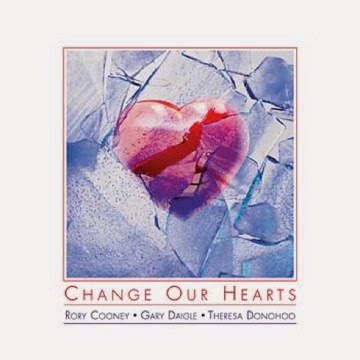
Songstories 25: Change Our Hearts (NALR, 1984; OCP 2000)

For those who don't already know this, the title of my new book for Lent was Mary Carol Kendzia's idea. "Change Our Hearts" was a song on our first album, You Alone, and has been continually in worship aids of one kind or another since 1986 or so, with the first volume of NALR's Assemblybook. It has been in Glory and Praise, Volume 4, as well as Glory and Praise Comprehensive, and after that, in every issue of Today's Missal Music Issue since OCP acquired the assets of NALR in the early 1990s. Change Our Hearts also appeared in the first edition of Gather Comprehensive, and has been in all the succeeding editions so far. So maybe, as a marketing idea anyway, it was a good title. Thank you, NALR, OCP, and Mary Carol.

After Tom Kendzia heard Terry sing in the studio when we were recording You Alone (she was singing a duet with the amazing Steve Rio on a song called "Yours Today"), he informed me that I was even stupider than he already thought I was if I didn't have her sing on more of the songs. So "Change Our Hearts" became one of the other songs she introduced to the church with her incredible voice. As you know, she is the voice of Cooneytoons for these 30 years, but she also sang on the original recordings of other well-known songs, like Lawton's "The Cloud's Veil," Kendzia's "Endless Is Your Love," Schutte's "Table of Plenty" and "River of Glory" and others.

Not long after the album was released, NALR sponsored a Bangladesh-inspired concert at the NPM convention in Cincinnati, I think, that was called "The Cry of the Poor." The concert, which was produced by Tom Kendzia on behalf of the company, featured many NALR artists performing together as a choir and instrumentalists, with composers leading the singing of their compositions with the arena full of musicians. It was a tiring but exhilarating and memorable experience. Carey Landry, the St. Louis Jesuits, Michael Joncas, Tom himself, and many others performed their compositions with a performing audience. Paul Quinlan led an energetic singing of "Sing to God a Brand New Canticle." I'd love to go back and see that playlist again, but alas, my copy has long turned to dust. I'm virtually certain, though, that David Haas accompanied Michael when he performed "On Eagle's Wings," and weird as this is, I remember them dropping the second chord of the refrain to the 6 chord from the (repeated) tonic as it is in the printed music, and I thought, "Well, if it's good enough for them..." and I've never played it any other way since that night.

At any rate, we got to do a song too, but since Terry was going to be at the convention, there was no need for the composer to mess up the song with his voice. In this sea of male composers and singers (the only exception that comes to mind was Carol Jean Kinghorn, who performed with Carey, and I think that Gloria Weyman might have been involved in a performance with Fr. Deiss in some way), Terry was a standout as she took the microphone in a sweet red dress that might as well have been bought just for the occasion, and she brought the house down with her performance of "Change Our Hearts." At least, that's how I remember it happening in the golden glow of distant memory. And if it didn't happen quite that way, it should have.

Though the song was recorded in 1984-85, it had been around for a few years before. I don't have any specific memory of the occasion for which it was written, but it was probably for Lent. I know that the phrasing, "Change our hearts," was intentional, a prayer. So much Lenten rhetoric (I heard this as recently as yesterday) is about the athletic rigor of Lenten practice, as though we could change our hearts just by doing some spiritual calisthenics, but if that is the case, why isn't the world, why isn't the church, different? Yes, there is some work we must do, of course. But take the example of David (in the traditional myth, at least) and Psalm 51. He prays, "Create a clean heart in me." If we analyze those words, he is asking something remarkable, something he knows only too well. By "heart," of course, the psalmist doesn't mean the muscle that circulates blood. He means his person, his whole self. The psalmist is, in fact, probably speaking Israel's heart, the heart of the whole nation, certainly by extension, and probably primarily. More importantly for us, though, the verb "create" is used, a verb that in Hebrew is never used unless "God" is the (understood) subject of the sentence! In other words, the psalmist is saying: "Look at me, look at us! We are damaged beyond our ability to repair, we can't fix who we are. Create us again! Start over. Make me, make us something new so that we can be who we know we are meant to be."


So "Change Our Hearts" is addressed to God, with the awareness that, well, for me at least, the ability to fix myself is out of my reach. When I look at the world around me, when I consider the church I'm a part of, I think I'm not the only one, so the song, like the psalm, speaks on behalf of the whole community of believers. Like Israel in the desert, we long for the fleshpots of slavery. "Your milk and honey seem distant, unreal,/ When we have bread and water in our hands." Our sharing in God's dream of freedom for us is a frightening prospect. What little life we have seems good enough to us. We want to cling to it in fear, even when we know it's not enough. We need more than a vision, we need someone to push us forward in faith. Maybe, like Saul, someone to knock us off of our violent horses, and concuss a new world into our hearts!

Yes, there's blowback from some folks who think that "one foot in paradise, one in the waste" is a silly or profane line, but nevertheless it's true. My life certainly straddles that border between the reign of God and the wasteland that is the world of borders, insurance, competition, class, and violence. I don't see anyone living much differently, so I don't think I'd change that line even if I were writing the song today. My advice is, if you don't like this text, sing something else! There are a lot of songs out there; I'm sure that you can find one that suits your worldview. Probably several, in the same hymnal.

Thank you to everyone who has supported us over the years since "Change Our Hearts" was first published in 1984, thirty years ago. The Bruno family at NALR, the OCP family in Portland, and yes, the GIA family here in Chicago who made "Change Our Hearts" a part of their hymnals' repertoire too. I'm grateful to you, and to everyone who has had the same thought as I had when I wrote it, have already lived thirty or so Lents, and not seen a lot of change: "Lord, this time, change our hearts."

OCP page for the song, click here.

Wednesday, March 5, 2014

Dust, ashes, cross, and water

You still occasionally hear a presider say it. After we’ve all made our way into the church, greeted each other, listened to the introductions, and sung, vigorously or tentatively,  a processional song, he will speak words to this effect: “Let us begin as we begin all things, in the name of the Father...” I always do a double take, and probably a head shake. I mean, I'm a cradle Catholic, and I don’t begin all things “In the name of the Father...” For instance, I don’t begin my shower that way. I don’t begin to watch The Simpsons that way. I don’t begin a trip to the grocery store that way (though some nights, with the roads as icy as they can be, it mightn’t be a bad idea.) No, we don’t begin all things with the sign of our faith. What we do begin is life in Christ with that sign, and there is the connection between the cross and baptism, between baptism and the Eucharist, and the identity of all of us gathered to celebrate.

The sign of the cross is not how we begin everything. It’s how we are begun, it’s how we were made into a “we,” and how we make a sign of that “we.”  It is our beginning, our common beginning, and it’s a sign of a cross, a sign that makes us say God’s name with it, as though to say (pardon my paraphrasing): Jesus Christ crucified is the image of the unseen Triune God, and his Spirit brings us together to live in that mystery. Let's wrap our minds around those words, before we do anything else at mass other than sing our community into a waking awareness! It’s better than we thought.

I suggest trying to take the view of Lent from the end of the journey, eyeing the symbols of Lent through the events of Holy Week and Pentecost, the same events that allow the liturgy to exult on Holy Thursday, “We should glory in the cross of our Lord Jesus Christ, in whom is our salvation, life, and resurrection.” So many pieces, such richness of imagery, to try and explore, juggle, and mine for meaning in life, ritual, and music! The voice at the Jordan, the spirit that drives into the desert, the voice in the desert with its empty promises, the voice on the mountaintop, living water, light and vision, life out of the tomb. The activity of the Spirit of the messiah, breathed out from the cross, breathed out in the resurrection upon the church, doing its work of reconciliation and bridge-building. And the cross itself, the “no” of Christ to Caesar and his collaborators, the “yes” to the one who calls him “beloved,” the trust that is gloriously affirmed on the morning of the third day.

And it all starts in ashes, with an admonition to “remember that we are dust,” already mixing our metaphors and clouding the issue. Is it the dust of Genesis, from which God really makes humanity, again? Or is it the ashes of the world, the destruction we’ve caused and hope to leave behind, that are smudged onto our foreheads in the cruciform sign of baptism? Both? Maybe it doesn’t matter, since we’re all made, every human being, of stardust, of the indestructible and eternal stuff of the universe, quanta within the microcosmos of hydrogen and helium and the atomic detritus of the Big Bang. “When I look into the sky, the moon and stars you have made, I wonder what we humans might be that you even notice us or care?” (Psalm 8, my paraphrase) Maybe God looks at us and sees stars, or maybe s/he looks at stars and sees us! To stardust we shall return. Just because that sounds new age-y doesn’t make it less true - the atoms that pass through us, that make and remake us, are the same that Confucius, Moses, David, Paul, and Francis of Assisi breathed, and we’re made of the dust that they have become. The blood of Christ, probably, in some form or another, physically flows in us.

But however much that is true, it is only a metaphor for the great unity forged in us at creation, making us children of the same Father, all beloved, all gifted, all sent, a unity consecrated and made explicit in baptism. Clearly, as there were for Jesus, there are satanic theologies competing for our allegiance. They depend on us to forget who we are, to lose our way in the desert rather than find it. Being God’s “chosen one” for Satan means having power, being full, daring to try and force God’s hand; for Jesus, it means remembering who is God, and who is human, knowing that to be human is to be held in the hand of God, and then choosing to embrace humanity in its hunger, powerlessness, and unknowing. To be God’s chosen means to be fully human, so that God’s work can make us divine. To try to take a shortcut is to build a tower named Babel, or to melt our good fortune into a metal cow and bow down in worship of it.

Forty days in the wilderness. Cross and water, dust and ashes, angels and demons, music and silence. Here we go again. This time, Lord, change our hearts.

Last year's Ash Wednesday post, "The Shadow on the Mountain". Click here.

Tuesday, March 4, 2014

My Lenten Manifesto

There's a tremendously poignant scene in the musical Camelot when Arthur and Guinevere try to find
a way to be together even as the world of the Round Table is collapsing around them. Arthur suspects that she and Lancelot are in love, the jealousy of Mordred and the dissatisfaction among the knights with Arthur's new code are causing dangerous rifts inside and outside the palace,  but Arthur is determined to turn his eye away from his own problems, not believe the rumors, and try to fix things in his marriage. The song, of course, is "What Do the Simple Folk Do?" The king and queen try to sing, whistle, and dance themselves back into the bliss of their lives before their idealism began to run aground on the rocks of bad choices and political inertia, but it is no use, and they know it. For all that they continue to feel for one another, they've come to place where they don't recognize in each other what they once did, or at least they are unable to return to the place they were. They fell out of love, and momentum of events around them is carrying them to places they do not want to go, or wish on one another.

In our parish, and I think this is the case in a lot of parishes, if not all of them, we do a lot of singing, whistling, and dancing. There's a lot of good stuff going on, people being fed, buildings being built for people who need them, clothing the naked, visiting sick and prisoners. But there's also a lot of wasted energy on the parish and diocesan level: initiative after initiative on behalf of this or that group, this new study, that new program. We barely finish the consultation and paperwork on one diocesan initiative when another one is started, and we wonder what happened with the hours of implementation we invested in the last one went. When you're standing in the middle of all that, it feels like something important is not being addressed. Some good and positive things are going on, but they seem to be disconnected from the structure. There is apparently some "ideal parish" out there somewhere, made up of ideal Christians, and we're all being groomed to measure up to that standard. Meanwhile, enthusiasm is waning, energy is dissipated on spinning wheels that are going nowhere, and frustration in the community mounts as it feels we're less and less relevant to the very people who should be most invested: Catholics.

I'm just speaking for myself, of course. But why does it feel this way?

I feel like we've gone way off message. We see success stories in business, judge success by numbers, particularly economic ones, and then embrace strategies that orient us toward business-like success, bigger numbers and more money. But once the folks arrive, what do we have for them? What's the "product"? Entertainment? It's cheaper, better, and more diverse elsewhere. Community? They can get it from sports teams and neighborhood, work, and school connections. Vision? Some people, at least, still think it's available from political parties. What about reconciliation, healing, and altruism? There's therapy, there are twelve-step programs, and certainly PBS, Doctors Without Borders, the Red Cross, and hundreds of other worthy places to donate disposable charity income. So, what's our product? Clearly, when it comes to entertainment, community, vision, reconciliation, healing, and altruism, "even the pagans do as much"!

I wonder if it's possible that the church has lost its way, that we have forgotten who God is, been attracted to the glitzier distractions of our first-world environment, and fallen in love with someone else. I wonder if, like Guinevere, we love the idea of our lover and the ideas of our lover, but our heart really wants to go play in a waterfall with the handsome stranger and forget about the love that built our house, gave us a worthy vision, and, in fact, brought the handsome stranger into town.

The trouble is, I think, the handsome stranger looks like a good choice, but in fact only has his own ends in mind. The attractive stranger is vapid and one-dimensional, is full of pretty lies and empty promises. He tells us, "just you and me, baby," but he says that to everyone, and we all end up wanting the very same things, which is bound to cause us nothing but trouble. When the Olympics of desire begin, the only way to keep order is through violence and threats; there will be competition, some will win, some will lose. A few will have a lot, most will not have enough. We want security, enough to live on, happiness, and we find that we're quite willing to compromise the unhappiness, pain, and insecurity of others to possess them ourselves. This is the dowry of the attractive stranger: competition, violence, and jealousy, a Ponzi-scheme happiness built on the sometimes invisible destruction of the other.

"No one can serve two masters. You will either love one and hate the other, or serve one and despise the other." What we, the church, have to offer is a different God. It is not the same god as we put on our coins, it is not the same god whose name we write on bombs and bullets. That is a different god, and Jesus knew that other god too, and came with a message for everyone who felt deep in their heart that something was terribly, impossibly wrong. It was this: Turn around, follow me. There's another God and another empire available.

In the first and second centuries CE, it was Caesar who claimed to be god. This is not a metaphor. In the Roman empire, there was no "division of church and state." Caesar was the state, and Caesar was god. The Pax Romana, the peace that was the promise and pride of the Roman empire, was bought and enforced at the edge of a brutal sword, and those who challenged Rome or its god quickly found out what it was like to for a mere human to incur the wrath of the god Caesar, and frequently, that knowledge was the last thing the dissenter thought as s/he suffocated on a cross.

Jesus came preaching a different God, a different empire, and a different strategy. He came to talk to anyone, but especially outsiders, people not among the religious, economic, or political elite, who knew deep down that something was wrong with the system. I like to say his message was something like this: "How's that Roman empire working out for you? How's that whole temple thing working out for you? Well, that's their god. I have another God for you, and that world you want is as close you as turning away from the other god, and following me to this one." Of course, the God Jesus proclaimed was not a complete stranger. Other gods were borrowing Abba's look and promise, and masquerading as the real thing. But the real thing is a violent emperor, a severe judge, or a meticulous bookkeeper. The real thing is "Our Father". The real God is like the head of a household, who cares that everyone in the household has enough to be happy, and where everyone in the household belongs and acts like it, brothers, sisters, aunts and uncles to each other.

What the Christian scripture refers to as the "kingdom of this world" is opposed to god. What defines "this world" are many nations, economies, and special interests. Borders, economies, armies, immigration control, corporations, and secret bank accounts are part of that world. It is a world of families, not family, and those families quickly become Hatfields and McCoys, with more and more sophisticated weapons that unleash more and more savagery. Jesus's message, repeated each Ash Wednesday but echoing through every verse of the New Testament, is "Repent, and believe in the gospel." To "repent" means to turn around, go in another direction. To "believe in the gospel" means that there's good news about our emperor. "Gospel" is a word that Mark used in his, well, gospel, a word that had not been used before in quite the same way. It's a word from military vocabulary, a word that means that there has been a victory over another hostile force. The good news, in our case, is that Caesar has been defeated by Abba, our Father, the God of Jesus.

So how are we going to turn this thing around? There's no easy answer. It has to be by forming a community of intention, people who are, in Hauerwas's happy words that echo St. Paul, "resident aliens." We have to begin to recognize the patterns of violence and competition that are the pattern and strategy of civilization, recognize the prophets of that god, and turn away from them. Do something new. We have to believe in God, in Jesus Christ, in the Holy Spirit, the forgiveness of sins, the trans-national community that is the church. We still have the habit of Sunday worship, thank God. We need to take Sunday back from the mall, the arena, and the entertainment world. We need to recover our core message, and translate it into the vernacular. We need to appeal to the dissatisfaction in the human heart, the knowledge we all have that our happiness, when built on the destruction of other people, is not a blessing from God, but an illusion and narcotic from the other god. We need to recover the sense of the human family that is not satisfied to be "like the pagans," that honors the poor and weak and offers to everyone enough of the earth's goodness to live well. And our forgiveness and good will needs to extend to our enemies. Finally, we need to live as though we believe Abba's empire is not like those of this world, and is not defended by the violence, or threats, drones, border patrols, or economic sanctions. We have the gifts of millions to employ in this strategy. We need to deploy them in a peaceful way.

"Turn away from sin." Sin is anything we do as a church, country, town, family, individual, that makes me happy (where me is the individual, or any group with specific goals or desires, including churches) and excludes, exploits, or oppresses others. In forty days or so we'll be asked again, "Do you reject sin? Do you reject the glamor of sin?" The "glamor of sin" is about as close as we can get to translating the Hebrew word "mammon" - the glint of gratification in an action or situation that is a counterfeit of happiness because it's not for everyone, or comes at a cost to others while delivering some comfort or security to us.

"Believe in the good news." There's a new sheriff in town, and the really good news is that God is not a sheriff, but the head of a household, a father, if that term works for you. The gospel lays out in the Sermon on the Mount and the parables of Jesus, and ultimately in the story of his peaceful, fiercely conscious refusal to negotiate with or even submit to the authority of powers other than Abba, his death by capital punishment and vindication by God, the terrain of the dominion of God and the route to the new world that is right where we are already standing. The empire of God, the reign of Abba, is for everybody, it's available now. What is required is that we turn around, and, following Jesus, walk the other way.

Tired of spinning our wheels, false starts, voices beckoning in ever new ways to waste our energy going nowhere, staying in the same patterns and routines. Even now, we can hear the gentle admonition of Jesus prodding us toward change: "How is the 'kingdom of this world' working out for you?" We know deep down inside, not even deep down sometimes, that we aren't happy. If we think we are, we're not remembering that we're part of an elite group of people who have profited from the exploitation of the earth and her peoples, and who defend those profits and our gains by violence, threats, and sanctions. Some of us actually have the power to change things in the whole world. But this change can't be achieved through violence, or military threats, banking strategies, or insurance plans. It comes by a change of heart, a gathering into community, and refusal to cooperate with the entrenched social strategies of sin.

Pope Francis seems to be trying to make inroads. Preaching a God of love and not judgment, but a love that is shown by involvement, going outside the walls, making mistakes, stirring things up. but "the kingdoms of this world" will no doubt push back, as I'm sure he finds out every day in the walls of the Vatican. "No servant is greater than the master," and the sign of the cross is a grim reminder of the destiny Caesar has in store for blasphemers against the cult of the emperor. People like us.

But I want to catch the vision of Mt. Tabor, the world that is just a step away, where the prophets of every generation, hunted down by their entrenched adversaries, speak their truth down the ages even as their powerful persecutors and murderers are forgotten. I want to fall in love again with the one who forgives my treason and treacheries three times, and cooks me breakfast; who takes my love for what it is and invites me to a future that I can't see but is as inevitable as love itself; who transfigures my surrender to death and hesitant choice to live right here and now into copious, unimagined life. I want Lent to mean something, I want my baptism to mean something. I want church to mean something.

I believe that the gospel is a choice. I hear Jesus say, "Do not be afraid," and yet I am afraid. I feel like I've been, like we have been, like the church has been, so assimilated into civilization that even we in the church don't believe any more in dialogue and invitation, but resort to threats and shunning to get our way. We use the strategy of Caesar to achieve a goal that isn't even on the agenda. We organize our activities around the strategies of IBM and General Foods, and we have forgotten who we are, that we have a message different from business, from Democrats, Republicans, and Ted Nugent.

But I believe there is hope. We still gather around to hear the gospel. Christ is still among us. We have been given the Holy Spirit within. We have the hunger and the silence that Lent offers to remember who we have been called to be, and what we might be if we just turn around and believe in the gospel. I don't know if we can do it on our own, which is why my prayer is, "Lord, this time, change our hearts."

We are ambassadors for Christ,
as if God were appealing through us.
We implore you on behalf of Christ,
be reconciled to God.
For our sake he made him to be sin who did not know sin, 
so that we might become the righteousness of God in him.

Working together, then,
we appeal to you not to receive the grace of God in vain.
For he says:

In an acceptable time I heard you,
and on the day of salvation I helped you.

Behold, now is a very acceptable time;
behold, now is the day of salvation.